

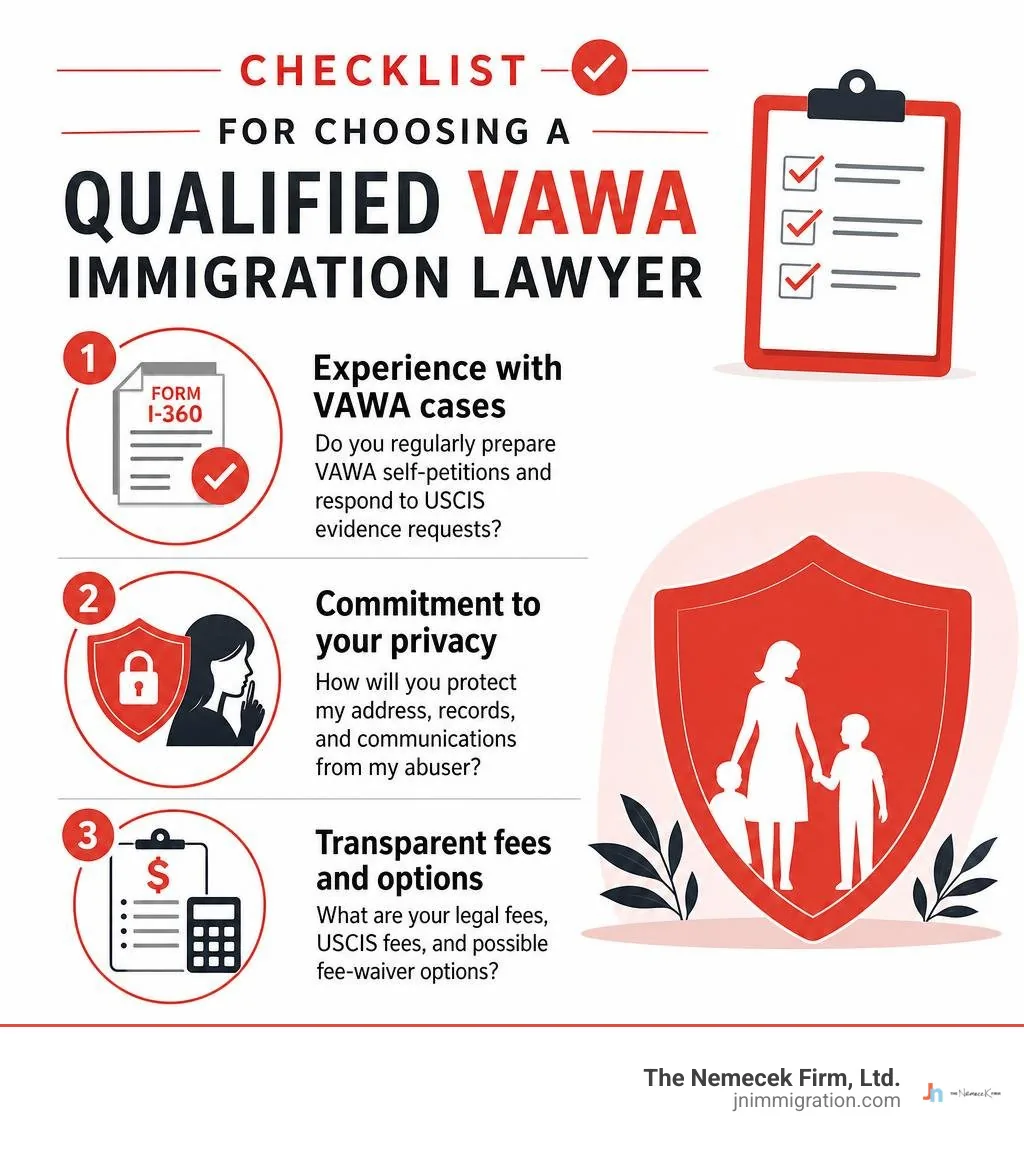
A qualified VAWA immigration lawyer should have hands-on experience with Form I-360 self-petitions, confidential client communication, and evidence of battery or extreme cruelty. Before you hire anyone, ask these three questions:
VAWA may allow survivors of abuse by a U.S. citizen or lawful permanent resident spouse, parent, or child to seek immigration relief without the abuser’s help or permission. The process can involve deeply personal evidence, immigration-history issues, work authorization, and a future green card application. Choosing counsel with the right experience can help you make informed decisions while protecting your privacy and safety.
I am Julie Nemecek, and this guide explains what to look for when choosing legal help for a VAWA case.
Under the federal Violence Against Women Act (VAWA), originally enacted in 1994, immigrant survivors of domestic abuse do not have to rely on an abusive relative to sponsor them for legal status. In a traditional family based green card process, the U.S. citizen or lawful permanent resident (LPR) petitioner controls the application at every step. This structure can allow an abusive family member to exert power by threatening deportation or refusing to attend immigration interviews.
VAWA provides an independent legal pathway. By filing an affirmative self-petition, you can request lawful permanent residence directly from U.S. Citizenship and Immigration Services (USCIS) without the knowledge, consent, or participation of the abuser.
To file a successful self-petition, you must establish a qualifying relationship under federal immigration law. Specifically, you may qualify if you are:
In addition to demonstrating a qualifying relationship, petitioners must show:
Navigating these detailed requirements highlights the benefits of hiring an immigration attorney to guide your self-petition smoothly.
Many survivors mistakenly believe that VAWA applies only to cases involving severe physical injuries or police arrests. Federal immigration regulations evaluate the totality of the circumstances under the standard of battery or extreme cruelty.
Extreme cruelty encompasses a broad spectrum of non-physical, coercive, and manipulative behaviors designed to establish dominance and control, such as:
Documenting these non-physical forms of harm requires comprehensive legal analysis and evidence compilation, which is why having structured U.S. immigration legal guidance makes a significant difference in establishing the merits of your case.
Filing an independent VAWA self-petition unlocks vital statutory protections that shield vulnerable individuals from removal while offering a direct bridge to permanent residency and work authorization.
Safety and privacy are paramount throughout the VAWA process. Under federal law (8 U.S.C. § 1367), USCIS employees are legally prohibited from disclosing any information about a VAWA application to the abusive sponsor or third parties. Furthermore, immigration adjudicators cannot make adverse determinations using information provided exclusively by the abuser or their associates.
Key statutory safeguards include:
Accessing reliable immigration legal advice ensures that any potential inadmissibility issues are identified and addressed with the appropriate waivers early in the process.
Survivors often ask whether they should pursue a VAWA self-petition or apply for a U visa. While both provide humanitarian relief, their requirements differ significantly:
| Feature / Requirement | VAWA Self-Petition (Form I-360) | U Nonimmigrant Visa (Form I-918) |
|---|---|---|
| Abuser’s Legal Status | Must be a U.S. Citizen or LPR | Any status (undocumented, USC, LPR, or unknown) |
| Qualifying Relationship | Spouse, parent, or child of the abuser | No familial relationship required |
| Law Enforcement Certification | Not required (Form I-918B not needed) | Mandatory law enforcement certification (Form I-918 Supplement B) |
| Police Report Requirement | Optional; non-police evidence is accepted | Must have reported the qualifying crime to authorities |
| Annual Statutory Visa Cap | No annual quota cap for immediate relatives | Subject to an annual statutory cap of 10,000 principal visas |
| Path to Permanent Residence | Direct adjustment via Form I-485 | Eligible to apply for a Green Card after 3 years in U status |
Choosing legal counsel for a humanitarian case is a significant decision. You need an attorney who combines technical proficiency in federal immigration statutes with a trauma-informed, empathetic approach to client care. Learning how to find the best immigration help in Columbus begins with understanding the specific credentials necessary for domestic abuse self-petitions.
When evaluating prospective legal representation, look for attorneys with proven experience in handling sensitive humanitarian petitions. A reputable practice will demonstrate:
During your initial consultation, ask targeted questions to evaluate the firm’s experience:
Booking a formal immigration case consultation allows you to assess the attorney’s communication style, legal strategy, and fee transparency before moving forward.
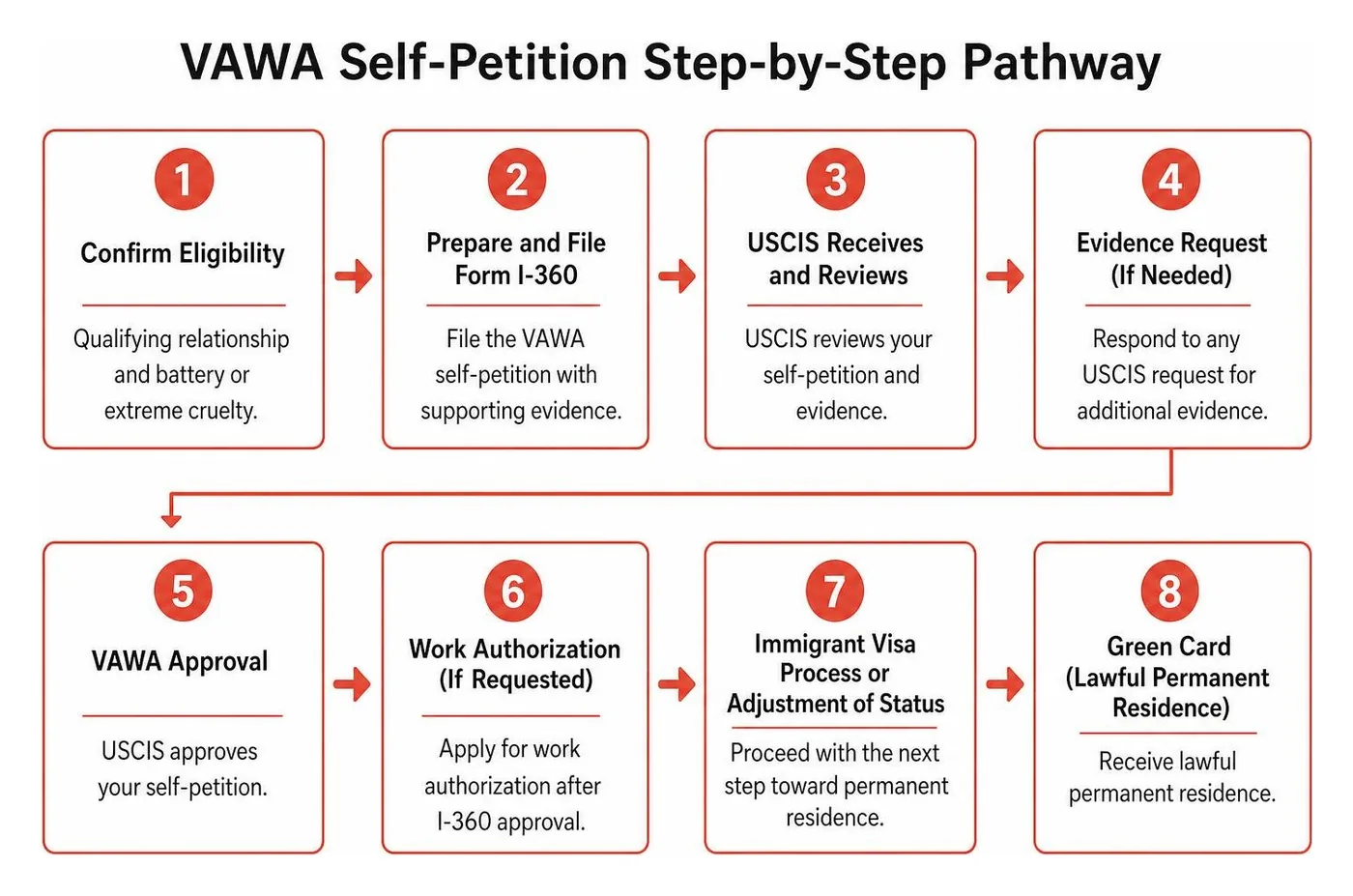
Filing a self-petition involves distinct procedural phases. Working with an experienced legal team ensures each filing milestone is met with comprehensive documentation.
Under federal immigration law, VAWA cases are adjudicated under the flexible “any credible evidence” standard (8 U.S.C. § 1154(a)(1)(J)). Because abusive partners often conceal documents or prevent victims from obtaining police help, USCIS allows you to establish eligibility through alternative secondary evidence.
A complete evidence packet typically includes:
Having dedicated immigration legal support ensures these varied pieces of evidence are structured into a clear, persuasive portfolio.
Once compiled, your self-petition follows a defined administrative sequence:
Working alongside an immigration lawyer for green card applications ensures your adjustment forms, medical exams (Form I-693), and ancillary filings are submitted smoothly.
Yes. Despite the historical title of the statute, the Violence Against Women Act is completely gender-neutral. Men who have been subjected to domestic battery or extreme cruelty by a qualifying U.S. citizen or LPR spouse, parent, or adult child are fully eligible to self-petition under the exact same statutory standards as women.
Furthermore, VAWA protections apply equally to same-sex marriages and LGBTQ+ partnerships. Federal immigration law recognizes all legally valid marriages regardless of gender. Abuse within LGBTQ+ relationships—including unique tactics like threats to “out” a partner to family, employers, or immigration authorities—constitutes extreme cruelty under VAWA. Consulting an experienced LGBT immigration attorney ensures your case is handled with cultural competency and care.
No. You are not required to have called the police, filed criminal charges, obtained a civil temporary protection order (TPO), or suffered visible physical injuries to win a VAWA self-petition.
USCIS adjudicators recognize that domestic abuse often involves emotional coercion, psychological intimidation, and financial deprivation where police involvement never occurred. Cases without law enforcement records are routinely approved through clinical psychological evaluations, detailed personal affidavits, and corroborating witness statements.
Traveling outside the United States while a VAWA self-petition or adjustment of status application is pending carries serious legal risks:
Always consult your attorney before making any international travel plans while your immigration application remains pending.
You do not have to remain in an abusive or unsafe environment to protect your immigration status in the United States. Federal law provides an independent, confidential pathway for survivors to obtain legal status, secure employment authorization, and build a safe, self-reliant future.
At The Nemecek Firm, Ltd., we provide compassionate, dedicated immigration legal counsel to individuals and families throughout Ohio. Whether you need support with humanitarian relief, complex family filings, or guidance from an immigration lawyer in Cleveland or Columbus, our team is committed to protecting your rights and guiding you forward with dignity and respect. Reach out confidentially to take the first step toward securing your safety and your legal status.
Get our immigration articles first in Google